
ultimate-guide
Is Red Light Therapy Safe? Side Effects Explained
By Editorial Team , Content Writer · · 16 min read
Last Updated: October 25, 2026
Quick Summary
Red light therapy is generally well tolerated when sessions run on a properly built medical-grade device under trained supervision. Most people notice only temporary warmth or faint redness, while the real risks cluster around excessive exposure, unprotected eyes, and photosensitizing medications or underlying conditions.
- Keep the provided eye protection on for the entire session and don't lift it to check your phone.
- Anyone taking photosensitizing medications, having active skin infections, or a history of skin cancer should get medical clearance first.
- Stop the session and call a clinician for blistering, swelling, spreading rash, or redness lasting more than a day or two.
- Sessions are cumulative, so benefits build over a series of visits rather than one dramatic reaction.
- Being well hydrated before and after your session is beneficial since light therapy works through living tissue and circulation.
Table of Contents
- How Whole Body Red Light Therapy Works and Why Safety Comes First
- Red Light Therapy Side Effects: What You May Notice After a Session
- Red Light Therapy Eye Safety: What to Know Before You Lie Down
- Who Should Not Use Red Light Therapy
- Red Light Therapy Medication Interactions and Photosensitivity
- Why Device Quality and Regulation Change the Safety Picture
- Repeated Sessions, Hydration, and Long-Term Safety
- Book Your $35 First Visit and Consultation
- Frequently Asked Questions
How Whole Body Red Light Therapy Works and Why Safety Comes First
Red light therapy safety and side effects questions usually start in the same place: someone has read a dozen contradictory claims and wants to know what the light actually does.
That distinction matters for safety.
The short version: red light therapy is generally well tolerated when a session is run on a properly built medical-grade device under trained supervision.
If you want the fundamentals before the safety detail, our beginner's guide to whole body red light therapy covers how photobiomodulation works and what a first session feels like.
Red Light Therapy Side Effects: What You May Notice After a Session
The most common red light therapy side effects are temporary and mild: warmth at the skin surface, faint redness that fades within hours, and occasionally a slight tingling sensation. These are normal responses to light exposure, not signs of harm, and they typically resolve without any intervention.
Temporary Redness, Warmth, and Mild Skin Irritation
Redness and irritation after treatment follow the same logic as a flush after exercise: blood flow increases in the tissue that received light. On most skin tones this reads as a pinkish glow for a short period.
A common mistake is assuming more redness means a more effective session. It doesn't. Sessions are cumulative, and the response you want builds over a series of visits rather than in one dramatic reaction.
When a Reaction Needs More Than a Pause
Most reactions settle on their own. A smaller set of responses deserve a call to a clinician rather than another session:
- Blistering or swelling that appears during or shortly after treatment
- Redness that persists for more than a day or two
- Mild pain that increases rather than fades
Watch out: continuing to expose skin that is already irritated is the single most common way a minor reaction becomes a real one. Stop, let the skin settle, and get advice before resuming.
Most reactions are temporary and mild, and these are the ones to watch for.
| Reaction | What it looks like | What to do |
|---|---|---|
| Warmth | Warmth at the skin surface | Expected; usually fades soon after the bed |
| Faint redness | Pinkish glow that fades within hours | Normal response; no intervention needed |
| Tingling | Occasional slight tingling sensation | Typically resolves without intervention |
| Blistering or swelling | Appears during or shortly after treatment | Call a clinician rather than book another session |
| Persistent redness | Lasts more than a day or two | Stop and get advice before resuming |
| Spreading rash or hives | Rash, hives, or itching beyond treated area | Call a clinician promptly |
Red Light Therapy Eye Safety: What to Know Before You Lie Down
Eye safety is the part of red light therapy that gets the least attention and deserves the most.
The practical rules are simple. Keep the provided eye protection on for the entire session. Don't lift it to check your phone or look around.
Schedule an Appointment today! →
For readers who want the deeper picture on light and retinal health, this resource on protecting your vision naturally covers what current research says about photobiomodulation and eye health.
Who Should Not Use Red Light Therapy
Red light therapy is not appropriate for everyone, and a responsible provider will screen for this before a session. People who should seek medical advice first, or avoid treatment altogether, generally fall into a few groups:
- Anyone taking photosensitizing medications, which we cover in the next section
- People with active skin infections, open wounds, or recent burns in the treatment area
- Individuals with a history of skin cancer or pre-cancerous lesions, who should get a dermatologist's clearance
Skin tone belongs on this list too. Darker skin tones and skin of color can respond differently to light-based treatment, and a provider should be adjusting for that rather than running an identical protocol for every body. This is one of several reasons a consultation comes before a first session, not after.
Red Light Therapy Medication Interactions and Photosensitivity
Some medications make skin more reactive to light, and this is the safety topic most at-home users never hear about. Photosensitivity is a heightened skin response to light exposure, redness, stinging, or a rash that appears faster and stronger than it would in an unmedicated person. The reaction is not an allergy to the light itself; it is the drug changing how skin absorbs and responds to light energy.
A Practical Medication Checklist
Before any session, read the warning insert for everything you take, prescription, over-the-counter, and supplement. The drug classes most commonly flagged for photosensitivity include:
- Antibiotics in the tetracycline and fluoroquinolone families, plus sulfonamides
- Acne and skin treatments, including isotretinoin and some topical retinoids
- Diuretics, particularly thiazides
This list is a starting point, not a complete index. New drugs are approved every year, and combination products can carry warnings the individual ingredients do not. The label is the authority for your specific medication.
What to Tell Your Provider
Bring the full list, every prescription, every over-the-counter drug, every supplement, and the dose you take. A provider who knows your medication list can flag a genuine interaction; one who never asks cannot. If a drug carries a photosensitivity warning, mention it before your session rather than after.
Why We Don't Publish a Universal Exposure Protocol
How much light a person should receive depends on their skin, their medications, their goals, and their history. That judgment belongs with the provider running the session, not with a generic chart online.
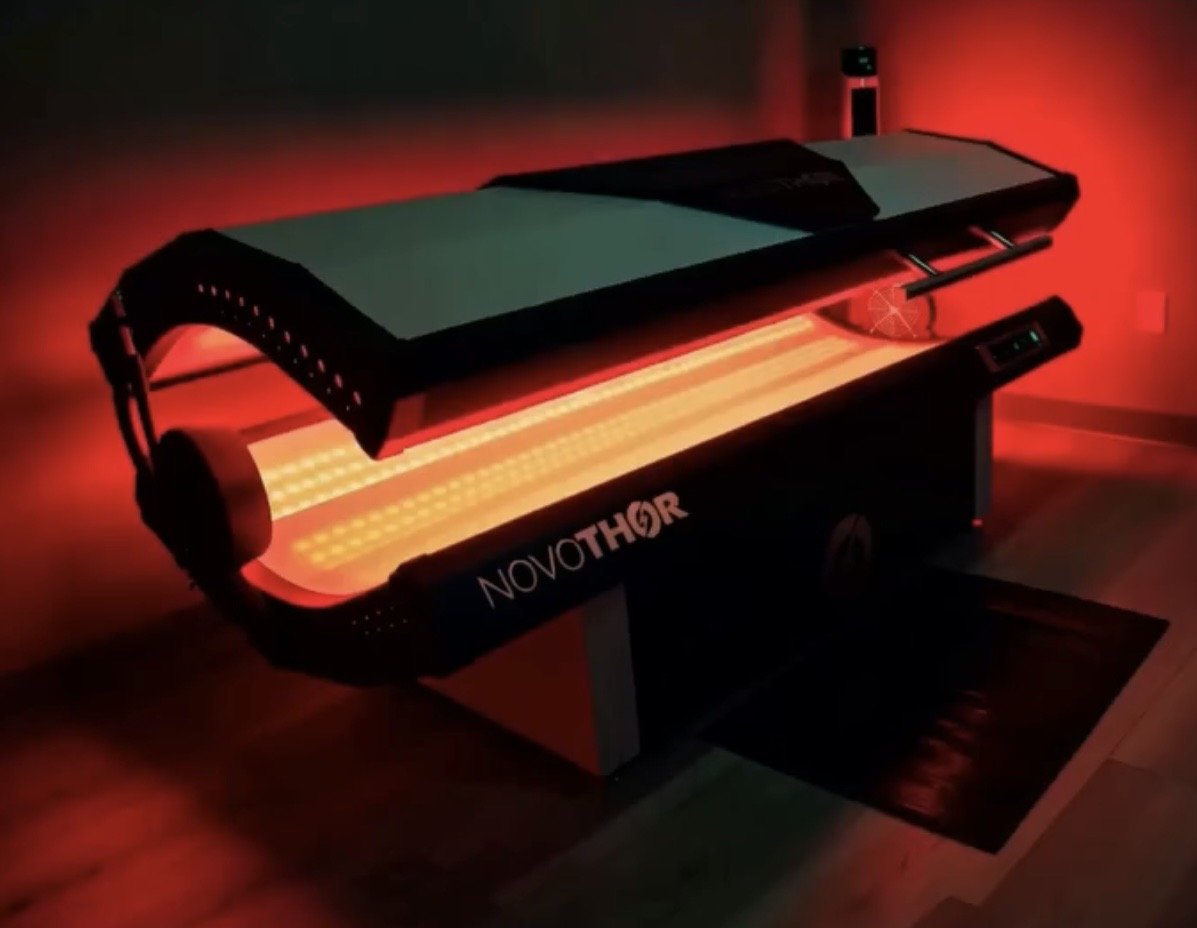
This is also why a consultation comes before a first session, not after. The NovoTHOR whole body red light therapy bed we use delivers a consistent mix of red light and infrared light across the entire body, and the session plan is set by a trained provider who has reviewed your medications and history, not by a one-size-fits-all protocol.
Why Device Quality and Regulation Change the Safety Picture
Here is the part of this topic that most articles avoid: red light therapy devices are not regulated the way medical treatments are, which means the label on a device tells you very little about what it actually emits. Anyone can sell a panel and call it therapy. Wavelength accuracy, irradiance, and build quality vary enormously across the market, and at this point red light therapy is not regulated in the way consumers assume, so people can say whatever they want about a device.
What FDA Clearance Does, and Does Not, Mean
FDA clearance for a red light therapy device confirms the device meets the agency's requirements for its intended use and that the manufacturer has submitted the required safety and performance information. It does not mean the agency has independently proven every marketing claim a seller makes about benefits. That distinction matters: clearance is a floor for device quality and labeling, not a guarantee of results.
When you evaluate any provider, ask three questions:
- What device do you use, and what is its intended use per the manufacturer?
- Does it carry FDA clearance, and for what indication?
- Where was it manufactured, and what safety instructions and eye protection come with it?
Vague answers are your signal to keep looking.
Why This Device Is Different
The NovoTHOR bed we use is an FDA-cleared, medical-grade whole body red light therapy bed manufactured in the United States. It delivers a consistent mix of red light and infrared light across the entire body in a single session, it treats the whole body, not one joint at a time, and it does not compare to other beds or other red light therapy.
Schedule an Appointment today! →
What to Do After an Adverse Reaction
Most reactions settle on their own, but knowing the right steps matters if something does not feel right:
- Stop the session. Continuing to expose skin that is already irritated is the single most common way a minor reaction becomes a real one.
- Note what happened, when it started, what it looked like, and how long it lasted. This is the information a provider needs to adjust your plan.
- Manage mild irritation with cool compresses and gentle, fragrance-free moisturizer. Avoid hot showers, harsh soaps, and exfoliants on the affected area.
- Call a clinician promptly for blistering, swelling, a rash or hives that spreads, pain that increases rather than fades, or redness that persists for more than a day or two.
- Do not resume on your own. Let the skin settle and get advice before your next session.
Repeated Sessions, Hydration, and Long-Term Safety
Red light therapy sessions are cumulative. This is not a one-and-done treatment, and anyone promising a single-session fix is overselling.
Hydration supports that process. Being well hydrated before your session and again afterward is beneficial, since light therapy works through living tissue and circulation.
Book Your $35 First Visit and Consultation
The safety questions have one honest answer in common: they depend on you.
We keep the first step simple. If you're ready to schedule, our page answering first-visit questions for East Long Branch explains how to book and what to expect when you arrive.
Red light therapy rewards consistency and punishes guesswork, which is why the right starting point is a conversation with someone who runs these sessions daily.
Frequently Asked Questions
Is red light therapy safe?
Whole body red light therapy is generally well tolerated when used as directed, and the NovoTHOR bed at our studio is an FDA-approved, medical-grade device. Most people notice nothing more than temporary warmth or slight redness. That said, no treatment is risk-free for everyone, so a consultation before your first session matters. We review your health history, medications, and skin considerations, then decide together whether whole body red light therapy with red light and infrared light is appropriate for you.
What are the side effects of red light therapy?
The most commonly reported red light therapy side effects are temporary redness, warmth, and mild skin irritation in the treated area. Some people describe tingling or mild discomfort. These usually settle within hours. Blistering or swelling is uncommon and should be evaluated by a clinician. Because sessions are cumulative, noticing a mild reaction early lets you adjust frequency rather than push through it. Tell your provider about any reaction so your plan can be modified.
Can red light therapy damage your eyes?
Red light therapy eye safety is a real consideration, especially with high-intensity light. Protective eyewear is standard during whole body sessions, and you should keep your eyes closed or shielded as instructed. People with a history of eye conditions, or those taking photosensitizing medications, should raise it during consultation. Do not stare into the light source. At our studio, staff walk you through eye protection before you enter the NovoTHOR bed.
Who should avoid red light therapy?
People with photosensitivity disorders, active skin infections in the treatment area, or a history of skin cancer should speak with a clinician first. Anyone taking photosensitizing medications, including some antibiotics and acne treatments, needs to disclose them. Pregnancy and recent steroid injections are also worth discussing. This is not a full list. A consultation lets us review your situation individually, which is why we recommend booking a first visit before committing to a series.
Does red light therapy interact with medications?
Some medications increase sensitivity to light, including certain antibiotics, diuretics, and acne treatments. Red light therapy medication interactions are not one-size-fits-all, so bring a current medication list to your consultation. We do not give dosage guidance, because exposure decisions depend on the individual and belong with your provider. If a medication is flagged, we may adjust the plan or ask you to clear it with your prescribing clinician first.
Is red light therapy safe to use every day?
Frequency depends on your goals, health history, and how your skin responds. Sessions are cumulative, not one-and-done, so consistency over weeks matters more than daily use. Some people do well with several sessions per week; others need more spacing. There is no universal schedule, and we do not publish dosage guidance because it is individual. Your consultation is where we set a frequency that fits you and adjust it as you progress.
What should I do before my first red light therapy session?
Arrive hydrated, since drinking water before and after sessions supports how you feel. Wear comfortable clothing and avoid lotions or oils on skin you want treated. Bring a list of medications and any relevant health conditions. Skip self-tanning products beforehand. Book a $35 first visit so we can review your history and confirm whole body red light therapy is a fit. You can schedule through our website or by contacting the studio directly.
