
how-to
Red Light Therapy for Chronic Joint Pain: A 2026 Guide
By Editorial Team , Content Writer · · 15 min read
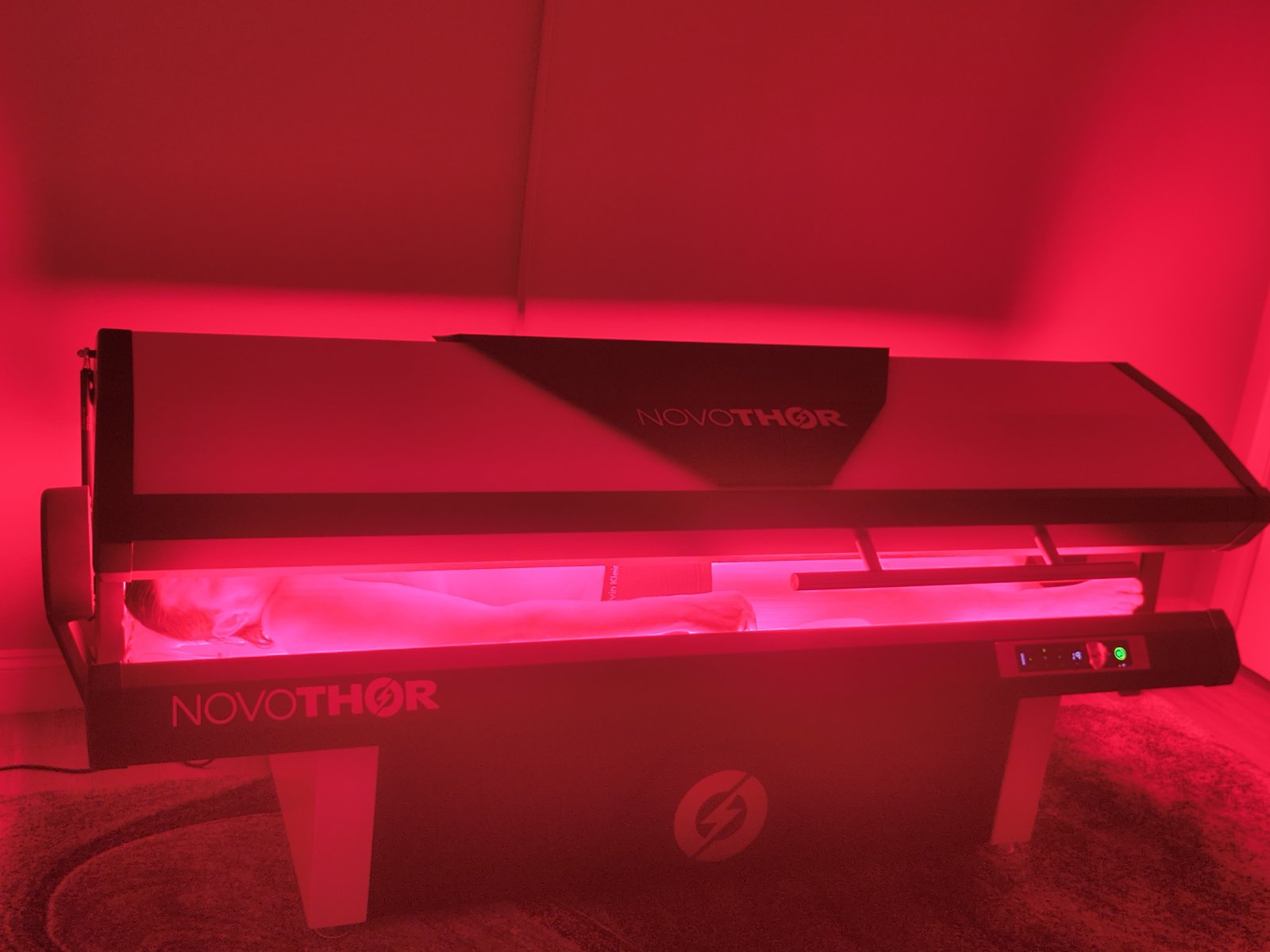
Table of Contents
- How Red Light Therapy May Reduce Chronic Joint Pain
- What the Evidence Says About Red Light Therapy for Arthritis
- Red Light Therapy for Knee Pain and Knee Osteoarthritis
- Red Light Therapy Treatment Frequency: Building a Protocol That Fits Your Joints
- Red Light Therapy Safety and Side Effects: Who Should Be Cautious
- How to Track Whether Red Light Therapy Is Actually Helping
- Conclusion: Realistic Expectations for Red Light Therapy
- Frequently Asked Questions
Last Updated: October 14, 2026
How Red Light Therapy May Reduce Chronic Joint Pain
Red light therapy for chronic joint pain is a non-invasive treatment that uses specific wavelengths of light to reach joint tissue, where it may help calm inflammation and support the body's own repair processes. This guide covers what the research can and cannot tell you, how a realistic treatment plan looks, and how to judge whether it is working. (Source: National Institutes of Health (NIH) on photobiomodulation)
The idea is simple: you sit or lie near a light source, the light passes through your skin, and cells inside your tissue respond. But the honest version is messier than the marketing: red light therapy for chronic joint pain is not a cure, and it does not work the same way for every joint or person.
What Photobiomodulation Does at the Cellular Level
Photobiomodulation is the scientific term for what red and near-infrared light do inside living tissue: the light is absorbed by structures in your cells, setting off a chain of responses. Here is the short version:
- Light energy is absorbed by mitochondria, the power plants of your cells
- This may boost the cell's energy output
- Better energy output supports tissue repair
That chain is a theory, not a proven script: many studies support pieces of it, but none proves the whole sequence in human joints. What most guides miss is that the effect depends heavily on dose, too little light does nothing, too much can blunt the response, and the sweet spot varies by device, wavelength, and joint depth.
Wavelengths and Penetration Depth: 660 nm vs 850 nm
The two wavelengths you will see most often are 660 nm (visible red) and 850 nm (near-infrared).
At Healing Light RLT, our pods deliver both 660 nm and 850 nm wavelengths, which lets a session address surface tissue and deep tissue at the same time. That matters for chronic joint pain, because the tissue around a joint is not uniform.
What the Evidence Says About Red Light Therapy for Arthritis
Most articles on red light therapy for arthritis say the evidence is "mixed" and move on.
It helps to sort the literature into three tiers.
Tier 2: Small human trials. These are the bulk of what you will find for arthritis. Many report reduced pain and improved function. But they tend to share the same weaknesses:
- Small sample sizes, often a few dozen participants
- Short follow-up, frequently 4-12 weeks
- Inconsistent dosing, so trials are hard to compare
Tier 3: Systematic reviews and meta-analyses. These pool the smaller trials.
A few patterns hold across the literature:
- Knee osteoarthritis has the most studies behind it
- Hand and shoulder arthritis have fewer, smaller trials
- Results often favor treatment, but effect sizes are modest
That last point deserves attention.
There is also a genuine conflict in the literature: some trials show clear benefit, others results indistinguishable from a sham device.
For a broader look at how light-based treatments are studied, the National Center for Complementary and Integrative Health overview of light therapy is a useful starting point.
The practical takeaway: red light therapy for arthritis is plausible and low-risk, but not a slam dunk.
Hand and Shoulder Arthritis: What Small Studies Show
Hand and shoulder arthritis are harder to treat with light than knees: the joints are smaller, and some sit deeper than they look. Small studies on hand osteoarthritis have reported less pain and better grip after a course of treatment, while shoulder studies are fewer and less consistent. At Healing Light RLT, we tell people that smaller joints often respond but may need different positioning and more sessions, a hand needs the light aimed precisely, while a shoulder may need deeper penetration to reach the joint capsule.
Red Light Therapy for Knee Pain and Knee Osteoarthritis
Red light therapy for knee pain has the deepest evidence base of any joint. Multiple trials and reviews point to modest reductions in pain and small gains in function for people with knee osteoarthritis.
The knee is a good candidate for a few reasons:
- It sits close enough to the surface for near-infrared light to reach
- It has a large joint surface area
- It is easy to position consistently between sessions
That said, "modest" is the operative word: in most trials the average improvement is real but not dramatic, and some people respond barely at all.
Red Light Therapy Treatment Frequency: Building a Protocol That Fits Your Joints
There is no single correct red light therapy treatment frequency. The most common approach in clinical settings is several sessions per week for a set number of weeks, then a maintenance schedule. Here is a simple framework to discuss with a clinician:
| Phase | Typical Frequency | Duration | Goal |
|---|---|---|---|
| Loading | 3-5 sessions per week | 4-8 weeks | Calm symptoms, build response |
| Assessment | Pause or reduce | 1-2 weeks | Judge whether it is helping |
| Maintenance | 1-2 sessions per week | Ongoing | Hold gains, manage flare-ups |
Session length depends on the device and the joint: a supervised full-body pod session differs from a small handheld unit aimed at one knee. Follow your specific device's instructions.
A Joint-Specific Protocol You Can Discuss With a Clinician
Use this as a starting point for a conversation, not a prescription. Your clinician can adjust for your condition, medications, and history.
- Knee: Position so the joint is exposed and relaxed. Use a device with near-infrared output. Treat 3-5 times per week for 6-8 weeks.
- Hand: Use a smaller applicator. Aim directly at the affected joints. Treat 3-5 times per week, tracking grip strength.
- Shoulder: Use deeper-penetrating near-infrared. Position for full joint coverage. Treat 3-5 times per week for 8 weeks.
Track one measurable thing per joint: a pain score, a range-of-motion number, or a simple task like climbing stairs.
Red Light Therapy Safety and Side Effects: Who Should Be Cautious
Red light therapy safety and side effects are generally favorable, but "generally" is not "always." Most people tolerate sessions well. Reported issues tend to be mild and short-lived.
Common, minor effects include:
- Temporary redness or warmth at the treated area
- Mild skin irritation
- Headache in rare cases
These usually resolve within hours to a day. If they persist or worsen, reduce the dose or stop and check with a clinician.
Who Should Not Use It, or Should Ask First
Some situations call for caution or medical clearance before you start:
- Photosensitizing medications. Certain drugs make your skin more reactive to light. Common examples include some antibiotics (such as tetracyclines and fluoroquinolones), isotretinoin, and some diuretics. Ask your pharmacist whether any of your medications carry a photosensitivity warning.
- Active skin infection or open wound in the treatment area. Light therapy is not a substitute for treating an infection.
- History of skin cancer or pre-cancerous lesions. Get clearance from a dermatologist before treating that area.
We use FDA-cleared equipment at Healing Light RLT, and our pods are free from heavy metals and toxic compounds. That said, no treatment is risk-free for everyone. Tell your provider about your medications and health history before you start.
When Joint Pain Needs Medical Assessment, Not Light Therapy
Red light therapy is for chronic, stable joint pain. It is not a diagnostic tool and should not delay care for something that needs evaluation. Seek medical attention promptly if you notice:
- A joint that is hot, red, swollen, and painful, especially with fever, this can signal infection
- Sudden severe pain or a joint that gives way
- Inability to bear weight or use the joint
Those signs point to something that needs medical care, not light therapy. Persistent or worsening joint pain always warrants assessment, regardless of how well a session feels in the moment.
How to Track Whether Red Light Therapy Is Actually Helping
Tracking is the difference between a real result and a hopeful feeling. Set a baseline before your first session, then measure on a fixed schedule:
- Pick one primary measure per joint (pain score 0-10, or a specific task)
- Record it before you start treatment
- Re-score it every two weeks
Two things to watch: pain scores drift with mood and sleep, so log them at the same time of day, and improvement is often gradual, a one-point drop over eight weeks is meaningful even if it does not feel dramatic.
For context on how chronic pain is generally managed, the CDC guidance on managing chronic pain outlines the broader options worth discussing with your care team.
Conclusion: Realistic Expectations for Red Light Therapy
Chronic joint pain rarely has a single fix. Red light therapy for chronic joint pain is a low-risk option that may reduce pain and stiffness, especially for knee osteoarthritis, but it works best alongside physical therapy, movement, and medical care, not instead of them.
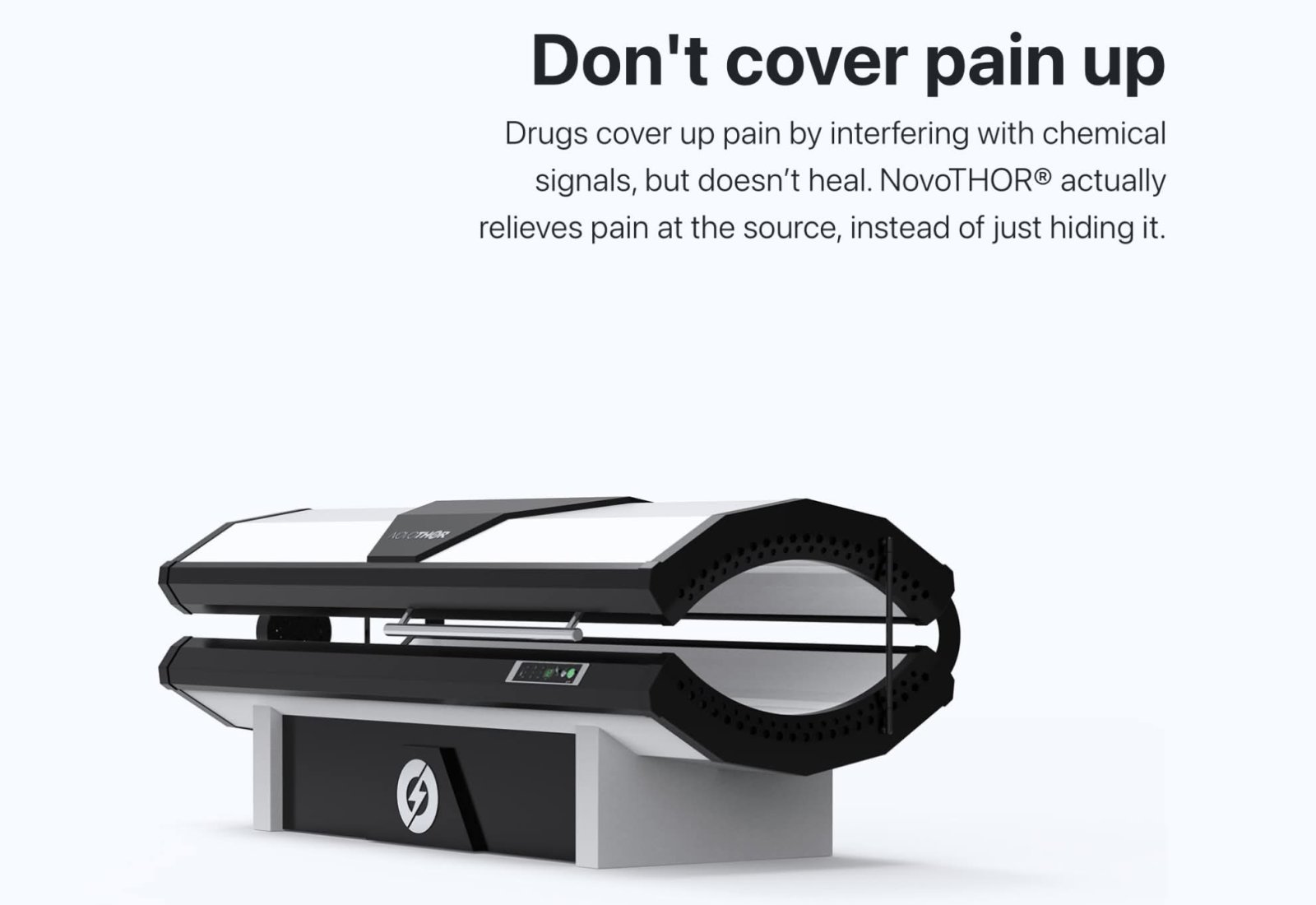
If you are in Howell or the surrounding area and want to try a supervised approach, Healing Light RLT offers full-body sessions using FDA-cleared NovoTHOR® pods. Our devices use 660-850 nm wavelengths for deep tissue reach, and every session is guided by our team.
Frequently Asked Questions
What is red light therapy, and how might it affect joint pain?
Red light therapy (also called photobiomodulation) uses red and near-infrared light wavelengths, typically 660 nm and 850 nm, to penetrate skin and reach deeper joint tissue. The light is absorbed by mitochondria, which may reduce pro-inflammatory signals and support tissue repair. For chronic joint pain from arthritis or overuse, this can translate to less stiffness, reduced swelling, and improved mobility over a series of sessions. It is not a cure, and individual results vary. A qualified clinician can help you decide whether it fits your situation.
How often should you use red light therapy for joint pain?
Treatment frequency depends on the device, the joint involved, and your condition. Many clinical protocols use 2 to 5 sessions per week for several weeks, with each session lasting 10 to 20 minutes. Some people notice changes within 2 to 4 weeks; others need longer. Start with a schedule you can keep consistently, and track pain, stiffness, and function so you and your clinician can adjust. More frequent sessions are not automatically better, and overuse can irritate tissue.
Can red light therapy replace medication or other arthritis treatments?
No. Red light therapy is best used alongside, not instead of, evidence-based care such as physical therapy, prescribed medication, or joint injections. It may help manage symptoms like pain and stiffness, but it does not reverse cartilage damage or cure arthritis. If you are considering it, talk with your rheumatologist or orthopedic specialist first so it does not interfere with your existing treatment plan. For some people it reduces the need for pain relievers, but that decision should be made with a doctor.
Is red light therapy safe for people with chronic joint pain?
For most people, red light therapy is well tolerated when used as directed. Reported side effects are usually mild and temporary, such as skin redness or warmth at the treatment site. Safety precautions matter: avoid looking directly into high-power devices, and check with a clinician if you take photosensitizing medications, have active cancer in the treatment area, or are pregnant. Medical-grade devices like FDA-cleared full-body pods are operated by trained staff, which lowers the risk of incorrect dosing.
Chronic joint pain wears you down, and guessing whether a treatment is working makes it worse. At Healing Light RLT, we pair FDA-cleared NovoTHOR® technology, 660-850 nm wavelengths, and a professional full-body pod setup so you can test this approach with clear tracking and honest expectations. Schedule an appointment with Healing Light RLT and find out whether red light therapy fits your joint care plan.